Industry News
Latest Bearing Industry News & Solutions


Latest Bearing Industry News & Solutions
In our previous guide, we explored how high-performance bearings are the quiet heroes behind a smooth, reliable fishing reel. Now, let’s take a closer look at the practical side: where exactly are these bearings located inside your reel, what sizes do you need, and how do you choose the right miniature bearings for replacement or upgrades?
A standard spinning fishing reel is a precision assembly with multiple movable parts, and bearings are distributed at each key friction position to reduce mechanical wear, lower rotation resistance and ensure flexible operation of all parts. Unlike ordinary industrial bearings, fishing reel bearings need to adapt to harsh use environments, including freshwater soaking, saltwater corrosion, sand and dust intrusion, and long-term high-speed rotation. These working conditions demand bearings with strong durability, smooth rotation, and reliable sealing. At Nova Bearing, we focus on the production and supply of miniature bearings, covering 60, 62, 63, 68, 69 series bearings, specially designed for fishing reel accessories to match various reel structures.
Critical Bearing Positions in Fishing Reels
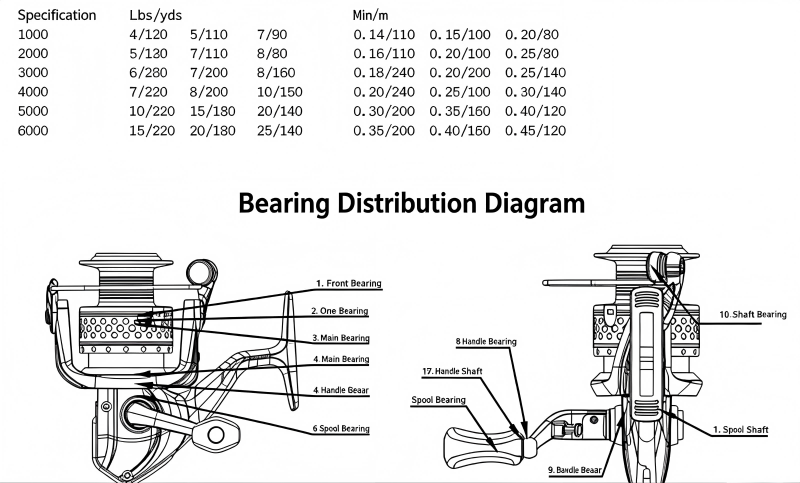
The internal bearing placement of a fishing reel is strictly designed according to mechanical principles, and each bearing undertakes a unique functional task. By viewing the diagram, we can clearly identify four core bearing positions that directly affect reel performance.
The first is the spool shaft bearing, located at the top of the fishing reel spool, which bears the high-speed rotation force when the spool pays out and retrieves line. This bearing is most exposed to water and line debris, so its smoothness directly determines casting distance and stability.
The second is the gear system bearing, located in the middle transmission structure. It connects the handle and drive gear, bearing the main torque during retrieval, making it the core load-bearing part of the entire reel.
The third is the handle knob bearing, which ensures the handle turns lightly and effortlessly, reducing hand fatigue during long fishing sessions.
The fourth is the anti-reverse bearing, located in the one-way clutch structure. It prevents the reel from reversing when fighting fish, improving safety and control.
Common models for fishing reels include 625ZZ, 626ZZ, 696ZZ bearings, which fit most standard spinning reels on the market and offer stable performance for daily and heavy use.
Key Factors for Choosing Fishing Reel Bearings
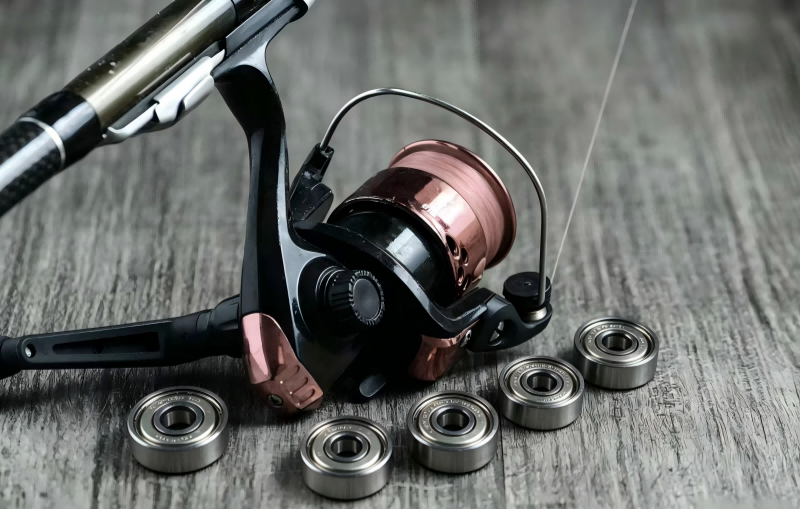
When replacing or upgrading fishing reel bearings, simply chasing a higher number of bearings will not improve real performance. Focusing on three key factors will help you select the most suitable products.
First, size accuracy is the primary prerequisite. The internal space of a fishing reel is compact, and slight deviations in bearing size will cause installation failure, loose movement, or increased resistance. Our miniature bearings use high-precision manufacturing and strict tolerance control, fully matching standard fishing reel specifications.
Second, sealing performance determines service life. Fishing reels are often used in water, where moisture, sand, and salt can quickly damage internal parts. We provide ZZ and RS sealing structures : ZZ shields suit freshwater environments with low resistance, while RS seals offer stronger waterproofing for saltwater and harsh conditions.
Third, material choice directly affects performance and durability. Our bearings use stainless steel for balanced corrosion resistance and cost-effectiveness, ideal for most anglers. For enthusiasts seeking ultra-smooth performance, ceramic hybrid bearings provide lighter weight and lower friction.
How to Upgrade and Maintain Fishing Reel Bearings
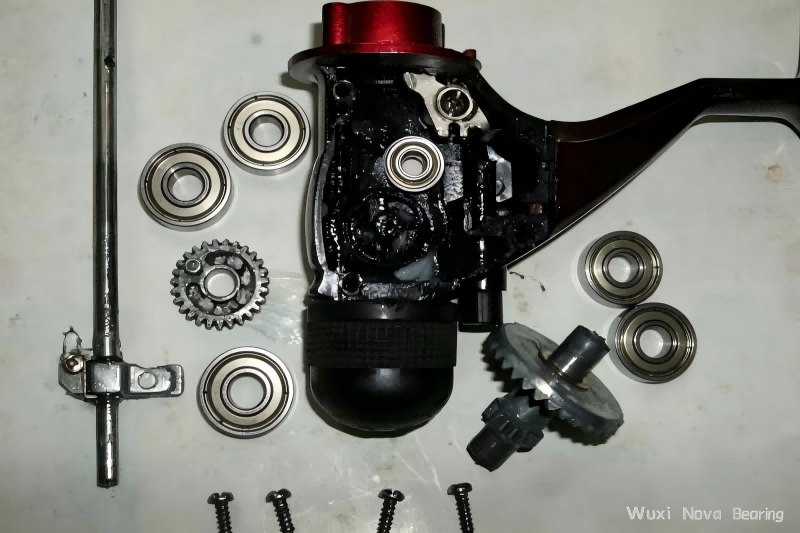
Upgrading your reel with high-quality bearings is one of the most cost-effective ways to improve smoothness without replacing the entire reel. Before replacement, confirm the bearing model and quantity using the reel diagram, then choose sealed bearings based on your fishing environment.
Proper maintenance greatly extends bearing life. After each use, rinse the reel with clean water, especially after saltwater fishing, to avoid salt crystal corrosion. Disassemble and clean the bearings regularly, remove dirt, and apply special lubricating oil. Avoid using the reel in excessively sandy or muddy environments to reduce particle intrusion.
Why Choose Our Fishing Reel Bearings
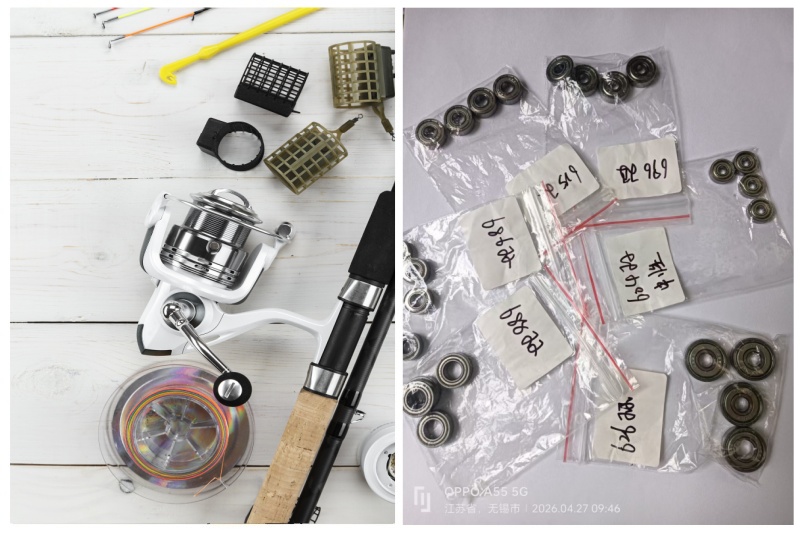
As a professional supplier of miniature bearings, we have years of experience in micro-precision bearing production. Our products are widely used in fishing reels, garden machinery, toy cars, motors, and other fields, with customized solutions for small-size applications.
Our fishing reel bearings have three core advantages: complete model coverage to solve matching difficulties, strict quality control with premium materials, and targeted design optimized for real fishing environments.
Whether you are an angler maintaining personal tackle or a merchant purchasing supporting parts, we provide reliable products and professional service. For stable performance and long service life, choose Nova Bearing fishing reel bearings for your tackle upgrades.
Contact Us
If you need samples, quotations or further technical support, please feel free to contact us: Email: info@novabearing.com , We will reply to you within 24 hours.
For more knowledge about miniature bearing selection and applications, please check our other articles.